


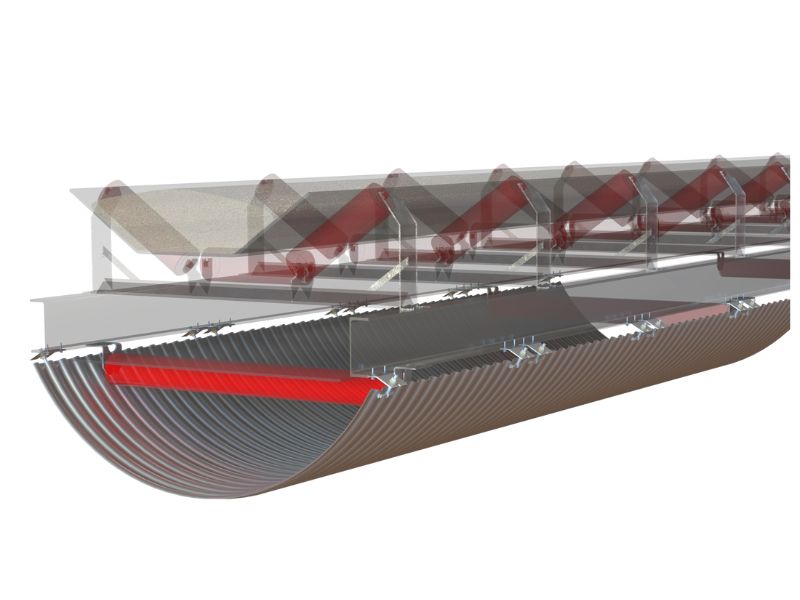
Reduce Moisture. Control Dust. Protect Productivity.
Conveyor belts exposed to harsh and unpredictable weather, including sun, rain and wind, can increase the risk of material contamination, product loss, dust generation and premature wear on exposed conveyor components. Conveyor covers provide a protective barrier that helps shield both the belt and the material being conveyed, supporting cleaner, safer and more reliable outdoor operations.
Conveyor covers are used across bulk materials handling operations to protect conveyed materials from moisture ingress and contamination, helping maintain consistent product quality and efficient plant performance.
In applications such as concrete batching and quarrying, excess moisture can impact material consistency, cause screen blinding, and lead to build-up, blockages, and costly downtime. By keeping materials dry and protected from
Quarrying Operations the elements, conveyor covers help reduce maintenance requirements and
improve operational reliability.
K-AllShelter® Conveyor Covers are designed to provide durable protection for conveyor belts and conveyed materials exposed to weather conditions such as rain, wind and sunlight. By covering the conveyor, they can help reduce material exposure, assist with moisture management, and limit wind-blown material loss in suitable applications.
Conveyor covers can also support site safety by helping to restrict access to moving conveyor components and conveyed material, depending on the cover design and installation. In addition, they can act as a physical barrier to help contain airborne dust and material movement, contributing to improved housekeeping and reduced environmental exposure.
K-AllShelter® Conveyor Covers are available in a range of materials and profiles to suit various conveyor widths, site conditions, and access requirements, with designs that effectively shed water and can be customised to suit specific conveyor configurations.
Materials
• Galvanised Steel.
• Pre-Lacquered Steel.
• Aluminium Zinc Coated Steel.
• Stainless Steel 304.
• Stainless Steel 316.
• Fibre Reinforced Polyester.
• Aluminium.
Accessories
A range of standard fixings are available contact Kinder.

Site specific wind load report available to confirm compliance to Australian Standard for wind loading (AS 1170.2:2021). Analysis uses Finite Element Method (FEA/FEM) to determine strength and stability.
Detailed report provided outlining the FEA model, design load calculations, safety factors and results as confirmation of compliance.