
Engineered for Reliability in a Demanding Lithium Processing Environment.
Project Overview
This project involved the design, manufacture, and delivery of conveyor pulleys, idlers, and impact belt support systems for a major lithium processing facility expansion in Western Australia.
Kinder Australia was engaged to provide engineered conveyor components across multiple conveyor systems, supporting the continuous handling of crushed ore within a 24-hour operational environment. Conveyor configurations varied significantly, with belt widths ranging from 600mm to 1500mm and belt speeds between 0.3 m/s and 2 m/s.
The project formed part of a broader processing facility expansion, delivered in collaboration with an external engineering company responsible for overall plant and conveyor system design. This required a highly coordinated approach to ensure seamless integration between Kinder’s rotating equipment and the broader conveyor and structural design.
Values Delivered
Kinder’s engineered conveyor solution delivered operational value to across several key areas:
- High-Quality, Compliant Delivery
All pulleys and idlers were designed and manufactured in accordance with AS/NZS and ISO standards, ensuring compliance with project specifications and operational requirements. - Structured Engineering Process
A clearly defined workflow — from design calculations through to drafting, manufacturing, and quality assurance — ensured accuracy, traceability, and consistency throughout the project lifecycle. - Collaborative & Adaptive Approach
Close coordination with the external engineering company ensured alignment between component design, conveyor layouts, and system requirements, reducing interface risks. - Reliable Fit-for-Purpose DesignEngineering designs were tailored to suit varying conveyor configurations and operating conditions, ensuring long-term reliability under continuous duty.
Engineering Collaboration
Collaboration between Kinder and the external engineering company was central to the successful delivery of this project. With responsibilities split between conveyor system design and component supply, continuous communication and alignment were essential throughout all project phases. Kinder worked closely with the external engineering team to:
- Align pulley and idler designs with overall conveyor system parameters and layout constraints.
- Ensure compatibility between component specifications and the broader system design requirements.
- Validate design data and operating conditions to ensure optimal component selection and performance.
- Identify and resolve potential interface issues early in the design phase, minimising the risk of rework during manufacturing and installation.
Internally, Kinder’s engineering, drafting, quality, and project management teams operated in parallel to support this collaborative approach. Engineering calculations, drafting, and approvals progressed simultaneously, enabling efficient turnaround while maintaining strict quality control.
Project management provided a critical link between all stakeholders, coordinating commercial, technical, and logistical aspects — including purchase orders, shipping, Material Data Records (MDR), and Inspection Test Plans (ITP) — ensuring alignment with overall project timelines.
Solutions Delivered
Custom-engineered non magnetic load zone solutions to suit load requirements, with optimised shaft sizing, bearing selection, and locking assemblies.
Designed for maintainability and performance, supporting efficient belt tracking and reduced downtime.
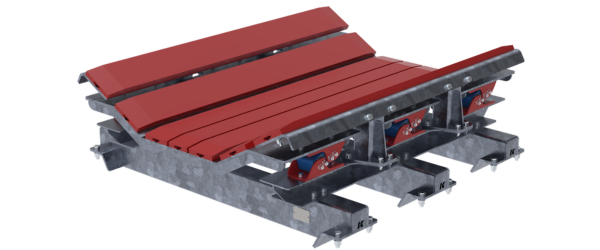
Engineered to absorb impact energy at loading zones, protecting conveyor belts and improving system longevity.
-
Non-Magnetic Load Zone Solutions
Specialised non-magnetic load zone components, including support and skirting systems, were incorporated to meet lithium processing requirements. These solutions help minimise contamination risk, maintain material integrity, and ensure effective sealing and support in critical transfer zones.
In addition, Kinder delivered:
- Detailed pulley and idler design calculations.
- Full manufacturing drawings using SolidWorks.
- Impact belt support system drawings.
- Comprehensive quality assurance and inspection documentation.
Results & Commercial Outcomes
Kinder successfully delivered a total of 76 pulleys along with associated idlers and impact belt support systems, meeting all specifications and quality requirements. All components underwent rigorous inspection processes, including dimensional verification, surface finish checks, and tolerance validation prior to delivery.
The collaborative engineering approach ensured alignment across all project stakeholders, supporting a smooth transition from design through to manufacturing and delivery. Early coordination with the external engineering company reduced design conflicts and minimised installation risk on site. From a commercial perspective, Kinder’s integrated and cooperative delivery model helped maintain project timelines, reduce rework, and improve overall project efficiency.
This project reinforces Kinder’s capability to deliver high-quality, engineered conveyor solutions through effective collaboration within multidisciplinary project environments — supporting reliable performance in demanding, continuous-processing operations.