
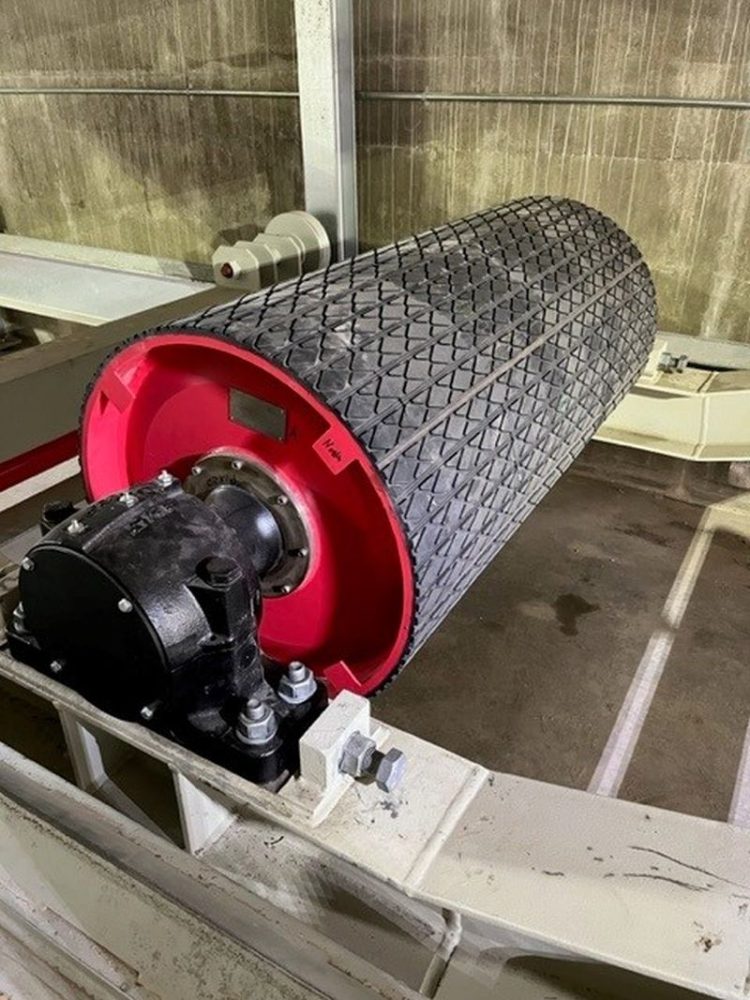
Conveyor belt systems are a critical part of many industrial operations, from mining and manufacturing to logistics and warehousing. At Kinder Australia, we’ve spent decades helping businesses like yours optimise their conveyor belt systems for better performance, efficiency, and reliability.
We explore the critical role pulleys play in conveyor belt systems and provide practical tips on how to get the most out of them.
Drive Pulleys: The Power Behind Your Conveyor Belt
Drive pulleys are the driving force behind your conveyor belt system, transmitting power from the motor to the belt. To ensure smooth operation, it’s essential to choose the right drive pulley for your application. Consider factors like belt speed, load, and wrap angle to select a pulley that meets your needs. A well-designed drive pulley will help prevent belt slippage, reduce wear and tear on the belt and motor, and ensure reliable operation. Additionally, consider the pulley’s diameter, material, and lagging to ensure optimal performance.
Tail Pulleys: Keeping Your Belt on Track
Tail pulleys keep your conveyor belt on track, maintaining tension and preventing sagging. Regular inspections and maintenance are crucial to prevent premature wear and tear. Check for signs of wear, adjust the pulley’s position as needed, and replace worn-out components to ensure optimal performance. It’s also essential to ensure the tail pulley is properly aligned and securely fastened to prevent belt tracking issues. By maintaining your tail pulleys, you can prevent costly downtime and extend the lifespan of your conveyor belt.
Take-Up Pulleys: Adjusting to Changing Conditions
Take-up pulleys help maintain tension in your conveyor belt, compensating for stretch or sagging. To get the most out of your take-up pulley, adjust it regularly to changing conditions. Monitor belt tension and adjust the pulley as needed to prevent over-tensioning or under-tensioning. Proper take-up pulley adjustment will help prevent belt wear, reduce energy consumption, and ensure smooth operation.
Snub Pulleys: Improving Traction and Reducing Slippage
Snub pulleys increase the wrap angle of your conveyor belt around the drive pulley, improving traction and reducing slippage. To maximise the benefits of snub pulleys, position them close to the drive pulley, ensure proper alignment, and monitor belt performance. Snub pulleys are particularly useful in applications where the conveyor belt is subject to heavy loads or harsh environmental conditions. By installing snub pulleys, you can improve belt traction, reduce wear and tear, and ensure reliable operation.
Bend Pulleys: Navigating Curved Conveyor Belt Systems
Bend pulleys help your conveyor belt navigate curved or bent sections. To ensure smooth operation, design your conveyor belt system with the bend pulley in mind. Consider factors like belt speed, load, and wrap angle to select a pulley that meets your needs.
Self Cleaning Pulleys: Ideal for difficult material carryback applications.
These are specialised pulleys made for difficult applications where material build-up occurs on the pulley face causing mistracking and belt damage. Fugitive material is ejected to either side of the pulley via the centre tapered cone.
Kinder has a comprehensive range of self cleaning pulleys, our K-Conveyor Spiral Pulleys are designed to be used for dry and free- flowing materials. The rotation of the pulley engages the self-cleaning action therefore releasing foreign material through and on to the inner tapered cone then to the outside of the conveyor.
K-Conveyor Wing Pulleys can be used for large lump, sharp and sticky materials and are designed to be used in adverse, very abrasive and dirty applications, especially where there is material build-up on a solid conveyor pulley shell. K-Conveyor HD Wing Pulleys are designed for applications where the standard wing design may be inadequate for the duty.
Pulleys play a vital role in conveyor belt systems, impacting performance, efficiency, and reliability. By understanding the different types of pulleys and their functions, you can make informed decisions to improve your conveyor belt system. At Kinder Australia, we’re committed to helping businesses like yours achieve their goals through expert advice and innovative solutions.
For more information on conveyor belt components and how to improve your material handling operations, explore our resources on Belt Conveyor Components and Belt Cleaning System Products.
Contact our expert team today!